
J.D.Drommer
„A tale from the collection In the Arms of the Goddess of Fate.”
I will likely never understand the Europeans. They are so strange. Their traditions are so flexible, their morals so questionable that I can scarcely find the words to describe them. They cast aside every dream, every love, every ideal that once accompanied them on their path through life—whether briefly or for a long time—without a second thought. At some point, the old, cherished things simply no longer matter to them. At least, I have yet to meet one for whom it was otherwise. Perhaps it’s important for me to admit that this land, this world, this place of longing could attract no one but such ambiguous souls. And since I have never truly met other kinds of Europeans, I cannot claim with certainty that they exist at all.
– Jusef! Is it much farther? – asked the gray-bearded Englishman.
– No, sir. Just a little farther east.
– I don’t like that we’re going so deep into the desert. We’re getting too far from civilization.
– What you seek, gentlemen, could never lie in the middle of a city. If it did, every fool would know of it, and the whole world would have tasted its blessing by now.
– Indeed, gentlemen! What sort of adventure would it be to search for treasure next to a tavern or a brothel? – one of the Englishmen translated my words into the language of the self-assured fools.
– Certainly a thrilling adventure! – replied another, and all burst into hearty laughter.
– But what of the godless beasts? How could they exist in a city?
– Mark! Don’t you remember the brothel in Wallachia on the way here? – they laughed again in chorus and began to gossip about the pleasure girls there.
It’s a strange feeling. I’ve experienced it countless times, yet to this day, I cannot quite place it. I sit in a car, among three others, with a total of fifteen Englishmen in the vehicles — cheerful, driven by a thirst for adventure — and none of them, except for me, knows that by dawn, they will all be dead.
We travel in open automobiles, faster than any dromedary. Behind us, immense clouds of dust billow; above us, the clear night sky. Thousands of stars gaze down upon us. A tranquil, silent night. No sign of the slaughter to come. As we race through the night, I glimpse the silhouette of a familiar rock passing beside us. Moments later, we pass another—a wide, flat-topped formation I recognize.
– Slow down! – I said.
The gray-bearded Englishman gave the signal, and we reduced our speed.
– Are we getting close? – he asked.
– Yes. The rocks mark the path.
As we crept forward, another stone emerged in the headlights.
– Stop. – I said, and at the Englishman’s command, the sluggish vehicles came to a halt. The engine noise faded, as did the sound of cheerful conversation.
– Where are we? – asked the Englishman.
– Not far from the destination.
– How do you know? You can barely see anything in this darkness.
– The rocks. The path to the spring is lined from this direction by eight stones. The ninth, the largest, holds the cave.
– Is this the first rock on the way?
– No. This is already the fourth.
– What?
– As you said yourself—it’s dark. Night. I didn’t see the first one, only the second out of the corner of my eye. I told you to slow down at the third.
– Could’ve said something sooner.
– I wasn’t the one who wanted to sneak in under the cover of night. Nor the one who wanted to race through the desert.
– We had to hurry. Dave spilled the plan to the competition while drunk.
– There is no plan. Not without me. Without a guide, no one will ever find the place.
– And you’re the only one who knows it, right?
– Just as I said.
– That’s odd. The guy at the camp told the Poles the exact same thing.
– Probably just a decoy leading poor souls into the hands of robbers.
– You know, I’m still not convinced that wasn’t you.
– You’re traveling with fifteen men, good sir. You’re in automobiles, armed enough to wage a small war. What kind of band of thieves would dare attack you?
– And what about the Poles?
– There were seven of them, including their guide. Seven scrawny camels, each man with a pistol, and as far as I could see, three rifles. An easy target. We are not.
– I suggest you don’t make fools of us. – The Englishman’s gaze wandered into the distance. – How far now?
– With camels, maybe three hours. With cars, a bit less. But we have to drive slowly. We can’t afford another mistake, because …
– … we might run right into the beast.
– Yes, sir. – I confirmed.
– The headlights?
– They can stay on for now. We’re still not close enough.
– Don’t believe the natives’ tall tales, sir!
– I used to think the same. But the war changed everything. What I saw during the Great War …
The bearded Englishman spoke of the terrifying beasts he had seen in his youth, during the Great War. Inhuman, gigantic creatures that tore apart airplanes and tanks, that churned the trenches anew as soldiers within desperately sought cover. His companions only said the old man must have been shell-shocked—either from a nearby mine or a gas attack. Whatever the truth may be, perhaps he’s the only one who truly fears the stories I’ve told. The only one who dreads this path into the deep, barren desert. But not enough to resist the lure of the fabled treasure. Of the spring, whose single drop is worth more than anything else on this Earth. The water of eternal life, the end of mortal existence. If only they knew what I know—they would have never set out to find it.
– We should proceed slowly.
– All men! Weapons at the ready! – ordered the Englishman.
With the vehicles, we moved out slowly, in a V-formation like migrating wild geese. In the sky, the stars shone bright; on the earth, silence, peace, and ominous darkness reigned.
We crept forward inch by inch until the moonlight finally illuminated our destination.
– Look! – I pointed ahead. – That’s where we’re going. The tall rock, also called the Pillar of Heaven. It rises from the desert’s sea of sand, in the middle of nothing, almost three hundred meters high. At the foot of the rock is a cave that leads deep into the earth. There, in the deepest depths, lies what you are searching for.
The old Englishman gave the order. We all got out of the cars and moved slowly and quietly toward the rock. I, the gray-haired man, and two others led the group closely side by side, while the rest followed loosely behind. The oil lamps had their glass covers shut; only faint light seeped through the cracks. We crept onward, slow and tense. Minutes passed.
– At this pace, we won’t reach it by dawn, sir. – came a voice from the back.
– Shut your mouth, Johnson! – snapped the old Englishman.
Suddenly, we halted. A strange sensation spread beneath our feet. It was as if the ground were moving, like waves.
– Stop! – said the Englishman loudly.
As my ears confirmed, everyone stopped. The old man cautiously set down his bag and knelt. I followed him. He held the oil lamp toward the ground and carefully opened the cover just a crack. In the filtering light, we saw the sand trembling, rippling, coiling like a thousand snakes. I turned to the Englishman.
– It’s here. – Just then, a strange noise reached my ears from afar. The hurried thudding of heavy footsteps. A large body was rushing toward us. I was about to speak.
– Sir! We’ll lose the treasure if we keep dawdling like this! – came Johnson’s voice again.
– Johnson! For the love of God, shut up!
But it was already too late. The massive body, with soft but heavy steps, swept through our ranks, carried on wind and a deep, guttural growl. Johnson let out a scream—then silence, cut short by a bloodcurdling sound that ended as abruptly as it began.
I dropped to my knees, and from what I could tell by sound, the other Englishmen did the same. Their breathing became shallow. Only the faint breeze drifting across the desert sand could be heard—and the thunder of their hearts, lashed into a storm by fear and uncertainty, crashing all around me.
– M-my lord? My lord? – a trembling, terrified whisper broke the silence.
– Yes, Boyle? – answered the old Englishman.
– Where’s Johnson? What happened? – asked the quivering voice.
– I saw nothing, Boyle.
Their feet had grown roots in fear. A kind of terror seized them—so unnatural, so overwhelming, like nothing they had ever known. Slowly, I reached beneath my robe and drew out the medallion. It was engraved with ancient, long-lost symbols.
Again we heard hasty, thudding steps. They drew nearer, fast. Everyone held their breath, their hearts pounding in their throats. Then the creature rushed past us again, accompanied by a deep, growling roar—furious that it hadn’t caught us. Whatever it was, it dared not defy the power of the medallion.
– Listen! – said the grey-bearded Englishman. – We can’t stay here. Darkness or not—it will find us. If not before, then at the first light of dawn. Get ready. If we hear it again and can tell where it is, I’ll open the lamp’s cover and throw it far away. When it goes for the light, we jump up and run to the vehicles.
– But sir… – began a trembling voice, choked by tears.
– Boylde! That’s the plan. Or we die. Summon all your courage and believe me. You’re barely seventeen—death has no business finding you here. Life is still ahead of you—your curvy, long-legged sweetheart, your dark-haired daughter with starry eyes, your broad-shouldered, proud son. Ahead of you still lies the night when you’ll tell your children and grandchildren about this. And ahead still is the last kiss from your widow to bid you farewell. It’s all ahead. So when I say run… you run like no one else on this round Earth! Understood?
– Yes, sir. – came the shaking voice.
The Englishmen knew nothing of the medallion. They didn’t know what they were truly dealing with. Or perhaps they chose not to know. At least the old man surely didn’t. But young Boylde—he already knew. He knew that none of what the old man promised would ever be his.
– You, Saracen! – the Englishman turned to me.
– Yes, my lord?
– Are you ready?
– Of course, my lord.
– Your voice sounds suspiciously calm!
– I trust you, my lord.
The rumbling steps drew near again. Louder, faster. Then it rushed past us once more. The gust stirred up the sand around us. The old Englishman waited, listening intently. When he judged the beast to be far enough away, he opened the lamp’s cover and hurled it—away from the direction of the cars.
– Up! Go! – came his hissed command.
The Englishmen bolted toward the vehicles. Only two remained behind: myself—and the young Englishman, whose limbs, despite all the rousing words, had frozen in terror like stone.
I pulled out my own lamp, gently opened its cover, and raised the light to my face.
– I’m sorry, boy. You didn’t deserve this fate. Not at your age.
The boy looked up at me, eyes flooded with tears, filled with dread. Then, from the darkness, into the light, bent a vast, formless, faceless brown mass. Boylde gasped in panic, his eyes wide as he looked up at the creature. With his final breath, he tried to scream, but the beast struck—and with a hideous, unnatural screech, the boy was dead. His body crushed in a single blow.
Then the creature turned to me. It had no eyes, but it saw. No ears, but it heard. It saw the medallion at my neck. It heard the words I whispered to it—in an ancient, long-lost tongue:
– Kill them.
The creature rushed past me and stormed after the Englishmen. To their misfortune, it was not alone. The loosely fleeing group was simply overrun by the monsters—human bodies were smashed into pulp. In the distance, I saw the headlights of one of the automobiles flicker, then tremble as one of the beasts tore the Englishman from the driver’s seat.
The old Englishman stumbled in front of the vehicle and fell to the ground. As he turned, he could still see massive hands emerging from the darkness, devouring his last comrades. Then, as no one was left, two towering beasts stepped out of the shadows. Brown and barely human in form, as large as hulking masses, without faces, without ears. They had been shaped from clay. They were golems.
The grey-haired Englishman pulled a small object from his pocket, yanked out a string, and raised it to his lips.
– Avenge me!
From the tiny rod came a faint, bell-like melody, and then the creatures fell upon him.
I stepped closer to the automobile. The golems had already vanished, taking the corpses with them. In the headlight’s glow lay only the small music box, stuck in the sand. I picked it up to examine it more closely. The jammed mechanism began to move again. Strange symbols were engraved upon it, and a human figure—simple, almost stick-like—was etched into its surface. The box was made of silver, yet it was dull and lifeless. With a final tug, the spring snapped back fully into the rod-shaped case, accompanied by a last, resonant click. A glowing blue light traced across the inscription on the box until it reached the figure. The figure gleamed in the blue glow.
Time passes slowly in the desert. Scorching heat and a blazing sun by day, and in the evening, life-giving coolness sweeps across the land. Each day feels like an eternity while waiting for dusk, and night slips past like the blink of an eye. This is no land for foreign peoples. Many empires has this harsh world already broken and tormented. One could say it once held no riches—but ever since oil was discovered beneath the sands, and science forged horses of rubber and iron that drink the black water, more and more explorers, adventurers, and envoys of distant rulers have arrived. Even in the Great War, it became clear that this world had strayed from its course, when millions lost their lives to the new beasts of rubber and steel. They drink the blood of the desert so their riders may ride faster, travel farther, and take more lives than ever before.
Thankfully, our little village lies far from all that. Far from the desert’s blood, far from the cat-and-mouse game of politics. Just an insignificant village in a sun-scorched, remote corner of the world. I looked at the rod-shaped box the old Englishman had left behind. The figure on it no longer glowed blue. Perhaps it had never truly glowed—perhaps it had only caught the moonlight. The melody had also faded, fallen completely silent. The desert spares nothing. The music box was likely broken. It could still be wound up, but now it gave off only a faint creak. The inscriptions were unknown—not Latin, not Arabic, not Cyrillic, nor anything resembling Greek. Very strange indeed.
All around me in the tavern, people from both western and eastern lands sat drinking, laughing, and talking. A chorus of different languages filled the air. A Polish group had hired me as a guide. With lofty hopes and a stubborn belief in treasure, they had come here. Just like all the other strangers. They were searching for fortune, for the fabled miracle. Fools, all of them—and nothing more.
I was once again lost in contemplation of the strange object when a figure sat down at my table.
– Good day to you – he said in Arabic.
– And to you – I replied.
The man was peculiar—tall and broad-shouldered, with a young face, barely over twenty. But his eyes, his golden-brown eyes, told a different tale. They looked like those of an ancient man who had seen half the world and grown weary of his own existence. Even his clothes matched those eyes: old, worn, and tattered. It was clear that this, along with his large, battered bag, was all he owned.
– Can I help you? – I asked.
– Perhaps. – he said with a smile and raised the glass to his lips.
– With what?
– Can you tell me what this worldly festivity is about? Are they searching for oil?
– You don’t know?
– No.
– They’re not looking for oil. For that, they’d need to go farther east or north.
– Then why have they gathered here, of all places?
– You truly don’t know? They’re searching for something they’ve heard of in legend.
– In legend?
– A myth. You’re not here for that, are you? What brought you to this sun-scorched desert?
– I came because of a friend. He sent me an invitation.
– Do you see him here?
– No. But he’s been here before.
– How do you know?
– He told me.
– What’s your friend’s name, where is he from? Maybe I can help you.
– That’s not necessary, thank you. Tell me instead about this legend!
– There are many versions. I don’t know which one these people have heard.
– What is it about that has drawn so many people here?
– A spring in the desert.
– You mean an oasis?
– Something like that.
– I admit, that would be quite a treasure out here in the desert, but coming all the way from Germany or the British Kingdom seems a bit much.
– This water is unlike any other that man can find. It is special. Whoever drinks it conquers hardship, sickness – even death.
The tall young man took on a strange expression, then said:
– Ahh… so the fountain of eternal youth. I recall a time when people sought it in the New World.
– You recall a time? – I asked, surprised.
– Please, pay no mind to my words. Would you do me a favor?
– What do you wish?
– I’d like to accompany you on your next journey into the desert!
– I’m sorry, sir, but that’s not in my power.
– You’re the guide, aren’t you?
– I am, but I’ve already been hired by the Polish gentlemen at that table. Until I’ve completed my task, they decide who I work with.
– I will pay you generously. – insisted the stranger, pulling from his worn pouch a hundred crumpled pounds sterling and laying them on the table.
– That’s a lot of money. – I said, amazed.
– Isn’t it? You need only do one thing: accompany me into the desert.
For a moment, my thoughts wandered. No driver or escort had ever received such a sum for a single journey. But I have no desires, no goals for which I could use it. No children, no wife whose welfare I could provide for. I am a simple, humble man here at the edge of the desert, at the crossroads of empires.
– Generous sir, but the truth is: my honor does not allow me to break a pact already made. However, I offer you a chance. Go to the Poles and offer them fifty pounds and your service in exchange for joining them on their journey. If they agree, I will take the remaining fifty pounds from you and accompany you as well, wherever they go.
The tall man pulled his lips into a wide grin. His smile and gaze gave him a foolish, almost mad look.
– You are a truly honorable man. May I know your name?
– They call me Jusef. And you?
– My name is István. It’s a pleasure to meet you, Jusef.
– Likewise. – We shook hands, as though it had already been decided that he would accompany us on the journey. Then he turned with a grand gesture and switched from Arabic to another language – a harsh, consonant-heavy tongue – as he approached the Poles as if greeting old friends.
I watched them for a while. At first, my clients didn’t seem to know what to make of it, but they soon warmed to the stranger’s company. I didn’t stay the whole evening. I retired early to the quiet of my home and prayed. I dislike crowds and noise. Silence and peace are far more pleasant to me. That’s how I wanted to spend this night, too, for tomorrow, in the early evening, I set out – with seven or eight strangers, white fools chasing after dreams. They yearn for long life, yet they have only a few days left.
Just before dawn, I went to sleep and rose again late in the morning. I was used to turning day into night and night into day. When the sun blazes overhead at its zenith, one must stay safely in the shade, for without water, nothing survives long in the scorched furnace. As the midday sun began to lean westward, I ventured out of the house, slung my satchel over my shoulder, and made my way to the tents of the foreigners.
When I arrived, sunburned figures lay sprawled around the tent, in bad shape. Their nightly drinking binges and excessive alcohol had left the sun plenty of opportunity to feast upon the men, who were more accustomed to European forests, meadows, and cities. Only one man sat calmly and collected at the entrance of the tent, wrapped in his large leather coat and shaded beneath a wide, frayed-brimmed hat.
– Greetings, my friend. – said the stranger named István, handing me fifty pounds from inside his coat. – Milek is expecting you inside. Go ahead!
I accepted the money, tucked it carefully beneath my robe, and entered the large green tent. Inside, I was greeted by Milek, the leader of the Polish group, together with a man who, unlike his three companions, had managed to reach the safety of the tent in time, and with Roderyk, his trusted right hand, who alone seemed alert and rested.
– Good day, Jusef! How were the night and morning?
– Thank you, sir. They were good.
– Have you already said at least three prayers today?
– I don’t pray to Him, sir.
– How so? Are you not also a believer in Allah?
– No, sir. I serve another.
– And whom, if I may ask?
– I would gladly tell you, but I don’t believe you’ve ever heard His name. Though the Muslim faith stretches across the entire desert, believe me, there are still many gods who remain unseen by Allah’s gaze.
Milek looked at me with a mild expression of incomprehension, then said:
– If you don’t mind, Jusef, we’ll be joined by a seventh travel companion. I believe you’ve already met him on your way in. Is that a problem for you?
– Not at all, sir.
– I’m glad to hear it. – With that, he handed me another five pounds. – We agreed on five pounds per companion. Now there’s one more.
– Thank you, sir. – I accepted the money with enthusiasm. I don’t desire it, but it seems I am slowly becoming a wealthy man.
Milek then turned to Roderyk and gave the order: he was to wake the rest of the group, and by evening, everyone was to have their tents packed, along with their provisions, weapons, and everything they had brought. The sunburned men managed to do so with great difficulty and pain by early evening. They had six camels, one cart, and two mules to pull it. There was no trace of the motorized machines the English or Germans were so fond of bringing. I was glad for that. No smoke, no black soot in the air. Besides – the animals and even the cart could be sold, provided they remained intact. More money, more wealth in my hands, here where many coins and many bills are worth almost nothing.
We departed shortly before dusk. Milak, I, and four other Poles rode on camels, while Roderyk and István sat on the cart, talking amongst themselves. I once again took out the little box and studied the engraved markings. I remembered exactly the flickering blue light of the inscription and the melody that Englishman had summoned that night. But now—nothing. No light, no sound would escape the object.
The days passed slowly. At night, we traveled—from dusk until dawn—and during the day, we retreated to our tents or the shade of the cart. Only István and I occasionally dared step out into the midday sun, while the others remained under cover until evening. On one such day, when I went out to water the camels and mules, István accompanied me.
While we tended the animals beneath the canvas stretched over the cart, he spoke to me in Arabic:
– You know, Jusef, you’re a very brave man.
– Why do you say that?
– You came into the desert with us—complete strangers—and you have neither your own camel nor a weapon.
– I have a knife, sir.
– Yes, but that won’t do much against seven men with guns.
– Are you implying I’m in danger? That your intention is to rob me, take my life, and leave me to dry up under the sun? Believe me, sir, that would be suicide. First, I carry nothing of value worth stealing. And second, without me, you wouldn’t even make it to the next oasis before your water runs out. Or are you suggesting that I would attack you—with my band of bandits lurking between the rocks?
– I never said any such thing. I merely wished to commend your courage, just as I praised your honesty. Don’t search for demons where there are none.
– Then forgive me, sir, for the assumption.
– Think nothing of it … but tell me—do they exist?
– Who?
– Your friends among the rocks.
– Oh, of course, sir. Hundreds of them. I offered each a pound. – I replied sarcastically.
– Then they work for very little. – the stranger joked.
Traveling by night is no easy feat for the untrained soul—but even by day, navigating the desert is hardly easier. The night’s special quality lies not only in its cooler, more bearable air, but also in the visibility of the stars above. Anyone who lives in the desert or at sea must know the stars, for only they can guide travelers through such desolate vastness. It takes many long years to learn the language of the night sky and to confidently find one’s direction on Earth by it. I’ve met only a few people who possess that kind of knowledge. For Europeans who stray into these parts, it’s hardly typical. They prefer to rely on maps, compasses, and other instruments—they cling to them. There is no room left in them for pure knowledge. The stranger, though—he’s different. I can’t be completely sure, but I believe he doesn’t look at the stars with the same wide-eyed wonder as the others. Rather, he reads them like someone charting a course, navigating a map within the swirl of light. He constantly checks where we’re heading and where we’ve come from. That’s dangerous, but not overly so. In just over a day, all that knowledge will mean nothing to him.
As before, we continued on until dawn—heading east, slightly northeast, deeper into the desert. The Polish travelers, with the exception of Milek, were growing steadily more restless. They had brought enough supplies and water for about two weeks—now we were on the fifth day. In just two more, we would all face a decision: continue on or turn back. They knew that Milek would make that choice based on my guidance, but they didn’t know me. Fear was slowly taking hold of them, and the growing resentment toward me became more tangible with every passing hour. Perhaps even Milek harbored a flicker of doubt when I hinted that we might reach the area they were searching for by the following evening.
– How are we supposed to know you’re telling the truth? – one of the Poles snapped.
– You’re not. – I replied. – You have to keep trusting me.
– That’s not something we can guarantee anymore.
– I’m sorry, sir, but do you really believe that if the spring were so easy to find, half the world wouldn’t already be here to drink from it?
The burly Pole’s face, already scarred from sunburn, flushed as red as if under the blazing sun again. His lips pressed into a hard line, veins bulged at his neck. Fear and hopelessness turned, in the face of my words, into a deep, dark rage.
– You insolent dog!
– Enough! – Milek calmed him. – Save your strength! Even if we reach the location of the spring tomorrow, we’ll have only two days to find it. Maybe three, if we ration the water.
– It’d be more if we had fewer people. – the burly man grumbled, and they all shot me sharp looks.
– Quiet, gentlemen! – István said calmly, while gently stroking one of the mules. – Maybe you’d have more water without him, but you’d also be throwing away your map. You’d all perish out here.
– If I were you, I’d keep my mouth shut, stranger. – said another. – Maybe we need him to guide us out of the desert, but not you. You’re just wasting our water.
– Silence! – Milek barked.
– Ah, my friend, I thought you came here in search of adventure. And adventure always carries with it the risk that the adventurer may not return. But surely that was something you considered—or perhaps you should have stayed home.
The Pole, eyes burning with fury, reached for his weapon. Yet István met his gaze with the same calm, even as the barrel of the rifle was aimed directly at him.
– Enough! – Milek commanded again, wrenching the rifle from the man’s hands. – This argument gets us nowhere. Tomorrow we reach the area. We give ourselves two, maybe three days to search—then we turn back.
– And what if we find nothing? – one of the Poles asked.
– Then we return better prepared – said Milek.
Slowly, the sun crept over the horizon. The Poles set up camp, and with the first rays of daylight we all turned in for rest. At least, most of us did. A quiet fear gnawed at me—the fear that someone might slit my throat while I slept. But sleep seemed to elude the others too, including István, who sat lost in thought, staring ahead.
– Why don’t you sleep, sir? – I asked.
– I cannot.
– Are you afraid as well?
– Of them? No. I am not afraid at all. I’m just thinking. Wondering what happened to the one who brought me here.
– Sir, I do not know what became of him, but if he was led into this desert and never returned, then he likely no longer lives. The sun out here steals life from everything. I do not mean to sadden you.
– Jusef, I’m not sad. I know my friend is dead.
– Truly? Then why all of this?
– Because I once made him a promise. If ever he needed my help, I would come to his aid. I can no longer keep that promise—but I owe him the truth of what happened.
– How do you know he was here? How do you know what became of him?
– I simply feel it. He called to me. And if someone calls me, then there is a reason.
– Who are you?
– There’s no simple answer to that. Better ask something else.
– How do you know he was here? How do you know what became of him?
– I once gave him a gift—something that would allow him to reach me from anywhere in the world.
– What kind of gift?
– A silver box. Long and rounded. Engraved on it: “Call me when you need me, friend—and I will find you.” Believe it or not, when you wind it, the words glow blue, and a magical melody fills the air.
I fell silent. My mouth went dry, sweat ran from my forehead into my eyes.
– I know my friend is dead. And I know you met him. I don’t know how the box came into your possession, but I know you’re lying. I won’t ask questions—you’d lie anyway. I’d rather wait for what’s to come.
Jusef, you are an honorable and brave man—I meant that. But believe me: you’re a fool if you think you should be afraid of them.
Then he said no more. No threats, no further words—just an old, worn book into which he sank, absorbed in silence.
The sun had not yet vanished beyond the horizon, yet dusk was already racing hastily westward. That’s when Milek gave the order to move out. He didn’t want to waste any time—so we pressed on quickly.
Eventually, we reached the first stone marker.
– We are getting closer – I said. – If we keep going this way, we will pass three more rocks. After that, a lone pillar will appear. Somewhere near there lies what you seek—but according to legend, Kurgarru and Kalaturru destroy all who dare approach.
– We’ll see when we get there – Milek replied.
So we continued our journey through the desert, step by step, rock by rock. And at last, after the final stone, the silhouette of the solitary rock tower emerged clearly in the moonlight.
– There it is, my lord – I said. – The tower, at the base of which lies the cave, and deep within it, supposedly, the fountain of the water of life is hidden. The place watched over by Kurgarru and Kalaturru.
– Demons? – one of the Poles asked skeptically.
– Golems. Creatures of clay and mud, once tasked by Enki, the highest among the gods, to guard the spring of the goddess of fertility, Innin.
– Children’s tales – scoffed the Pole.
– You believe so much in the fountain of eternal youth that you traveled to the ends of the earth—but you doubt the golems meant to guard it? – István retorted.
– Enough! – Milek interrupted them. – Whether golems exist or not, we’re moving soon. We’ll form a circle, facing all directions. Slowly but steadily, dawn will reach us. Until the sun rises, we hold this position.
And so we did. We made camp behind the rock and waited for the first rays of the rising sun. Some of the Poles fell asleep as if they had nothing to fear, while Milek and two of his men busied themselves preparing their weapons. Only one among us, who belonged to neither group, was István. When the plan had been set, he volunteered to keep watch, climbing the rock and sitting cross-legged until dawn.
We were positioned east of the rock tower, so the first sunbeams broke over us from behind. When the moment arrived, we mounted the camels and wagon and moved slowly but steadily toward the rock. Milek’s plan was to approach the tower and assess the situation—whether any danger awaited. If the coast was clear, we would begin the search.
The caravan moved calmly in the soft, still-cool light of the early morning sun. We reached the first rock, then the second. But at the third, something changed. After the third rock, the camels and mules grew restless.
– Hold the animals back! – Milek ordered. But the animals would not calm.
Suddenly, the skeptical Pole jumped from his camel.
– There’s no monster here! – he shouted. – Maybe there’s a lion or a leopard wandering about, scaring the animals. Would make a fine new rug.
– I don’t know what kind of pelt that lion or leopard would have that could survive this deep into the desert – but I doubt it would be worth mentioning – István mocked.
The Pole pointed his weapon at István.
– That’s enough! – he snarled.
– Stop! – ordered Milek.
But István’s previously calm, mocking expression changed. He placed both palms on the wagon and listened. Within seconds, I felt it too—the earth was trembling. They knew we were here. The Pole kept talking, cursing, threatening—even though the ground was clearly shaking beneath our feet. Milek looked at me in shock—and then it happened: a dense cloud of dust erupted from the earth, surged toward us, and struck first the shouting Pole, then the wagon, which shattered into splinters.
The animals panicked, and in the swirling dust, we couldn’t see a thing.
– Everyone to me! – Milek shouted.
But I already knew what that meant. In the whirlwind, I rushed in the opposite direction of the sound. Slowly, the air began to clear. Three of the seven men had clustered together. Milek saw me and cried out:
– Come! Hurry! – Then another dust cloud rose and crashed into the group. After that—silence.
The stirred-up dust slowly settled to the ground, and towering above the motionless bodies stood the two golems: Kurgarru and Kalaturru. They lifted the corpses—five in total—and began to move toward the tower. As they passed me, one of them spoke in a booming, cavernous voice:
– Come with us. The Mistress is calling you.
For the first time in my life, they spoke to me. For the first time, my goddess had summoned me. It was the greatest honor I had ever known. The sages who had once led me into the faith of our goddess spoke of stories, of the reward given to those who serve with tireless will and pure devotion. I had never thought she would recognize such a thing in me—that my loyal soul would truly be worthy—but apparently, it was.
I paid no more attention to the five taken by the golems, nor to the two who were missing. Most likely, death had taken them during the assault. The desert would consume them and continue to grow. Perhaps, one day, it would consume the whole world.
Slowly, we reached the rock tower, at whose base a cave lay hidden. The entrance was framed by small and large stones—well concealed from prying eyes. Never had I come so close to this place. What would await me below? What wonders would my mortal eyes behold, and what would be the reward for my fleshly vessel?
The cave was damp, dark, and cool. A moist breath of air brushed across my body. It was pitch black—no sunlight reached this deep.
– Just follow the sound of our steps – the booming voice said again.
The sound and the joy intoxicated me. So I continued onward, until in the distance I perceived a pale, blue glow. Waves danced along the wall, and the sound was like that of a sea whipped by wind. We reached the blue light. We found ourselves in a vast hall—a gigantic cavern containing a lake from which the blue light emanated.
– … – whispered a faint voice. – … Where are we? – It was Milek, lying on the back of a golem.
– There, where you wished to go, Milek. To the source. The source of the goddess Innin.
– What? Will we receive life? – he asked foolishly.
– Perhaps some. But it will not be you. The water cannot simply grant life. It nourishes Innin—and may nourish one who drinks of it. But the water, too, must be nourished. Life can only be replaced with life.
The golems dropped the five men at the lake’s shore. By then they had regained consciousness—lying weak, wounded, and confused on the ground. One of them looked toward the water. A mud-serpent slithered out and seized him by the ankle. He cried out and tried to escape, to crawl—but the clay tendril pulled him back to the shore. His skin began to gray, then blacken—his face froze in an expression of terror before turning to clay. Black clay. And finally, he collapsed inward, his shape strangely preserved.
The men looked around. The ground was littered with human forms trapped in clay—mortal remains of earlier adventurers. Some faces were still distinguishable, frozen in the horrific contortions of their final moments. Panic gripped them. They tried to flee from the water as quickly as they could—but the mud-serpents caught them, dragged them back to the edge, shattered the clay bodies of previous victims, and drained the life from their flesh. New statues were formed.
When the screams of death and cries for help had faded, silence returned to the cave. Perhaps only moments had passed, but it felt like an eternity. The two golems, Kurgarru and Kalaturru, knelt. The ground began to tremble, the water grew murky, its surface frothing with agitation. A rock rose from the depths, carved into a throne—and upon that throne sat a beautiful, full-bosomed, long-haired woman with dark skin, naked. Her eyes were black as the void. One could scarcely believe she was not a goddess.
– Are you…?
The words caught in my throat with awe.
– Y-yes, my Lady. – I said, kneeling.
– Come closer… Don’t worry, I will not harm you. You are the last true believer I have left in this world.
– There are truly not many of us left, but I am certainly not the last.
– Only in you do I still feel the pure faith a deity requires. The kind I wish to reward—and entrust with a task.
– You honor me, my Lady.
– My priest, my chosen, has not proclaimed my word on earth for centuries. I wish to change that. I want you to proclaim my kindness, my justice, and my power—and gather new believers for me. I wish to step out of the shadows and once again reign over mankind.
– I thank you for this honor, my Lady, and I gladly accept this gracious task. But I fear I have neither voice nor rank that would grant me an audience.
– Do not fear… I shall not leave you alone. I offer you my water, so that my voice, my will, and my strength may speak through you. As a reward for your service, I shall extend your life for as long as your duty binds you to me. Do you accept this?
At the edge of the water, I fell to my knees and said:
– Yes, my Lady. I will serve you until my soul leaves my body—and even beyond.
– You are too easily bought… unlike the one I met first, – said a familiar voice.
I turned and saw István standing at the entrance of the cave.
– Who are you, that you dare enter my hall? – Innin asked sternly.
– The goddess Innin, if I’m not mistaken, – said István.
– I asked you a question, worm.
– Arrogant and stupid, like every other deity. Boring.
– You dare insult me, you worthless creature?
– Oh please. I’ve heard worse. Try a little harder.
– Ku… Gu…! Bring him to me, as a sacrifice!
The two golems rose and charged toward István. He stood calmly, then suddenly drew a sword and sliced off one of their heads while dodging the other. But the golem whose head had fallen reassembled just moments later and attacked again—István simply evaded it.
– Behold… what happens to those who resist, – said Innin to me.
István threw aside his sword and rummaged through his coat. After a moment, he pulled something out: two rods connected by a string. The same runes were etched into them as on my own artifact, and the same flickering blue light glowed across them. István pulled the rods apart and flung the cord around the neck of the clay giant. With a sharp tug, the head dropped again—this time, however, no new one grew. The black clay began to dry, crack, and crumble to dust.
– This is impossible! – cried Innin, stunned.
Shortly after, István sliced through the second golem—from the waist to the shoulder—and it too fell to pieces. He calmly stowed the string and picked up his sword again. I pulled the pistol I had taken from Milek and aimed it at him.
– Do it… Kill him! – ordered Innin.
– If I were you, I wouldn’t, – said István, stepping toward me.
– Stop! – I shouted.
– Kill him! – screamed Innin, and I fired. Once, twice, three times, then a fourth. All four bullets pierced István’s chest. He paused—then continued forward.
– This is impossible, – I stammered.
– No. He is a damned soul, – said Innin. – One cursed to eternal misery.
I drew my knife and rushed at István. He merely swung his sword in my direction—and cut deep into both my thighs and my right hand. Roaring in pain, I crashed to the ground.
– Silence… – said István, still calm and slow as he turned to face Innin.
I looked toward my goddess—and could not believe my eyes. There was fear in her gaze. Genuine, unfeigned fear—of a man.
– Don’t do this! I’ll give you everything in my power! – pleaded Innin. Every trace of divinity had vanished from her all at once.
István stopped at the edge of the lake. The tentacles did not reach for him. They did not seize him, did not turn him into a statue of clay.
He drew a knife from his belt and said:
– You wanted a sacrifice from me, didn’t you, Innin? Very well. I’ll give you one.
Then he dragged the blade across his palm.
His blood dripped into the water, which immediately began to boil and churn.
Innin screamed in pain. She thrashed and raged, flailing wildly. Cracks spread across the stone throne she sat upon.
The air filled with scalding steam, and the cave walls began to crumble. The lake roared and swept away the countless clay bodies. With each passing second, it crept closer to me—and when the first drops touched my skin, they seared, they burned. But I couldn’t move. My wounds held me fast.
István walked toward the mouth of the cave. As he passed me, he said only:
– Much blood clings to your hands. Some of their faces you even saw in their final moments. They stood before you, even when you entered this place. But there was no remorse in you, no shame. And so you deserve no better. Stay here and perish with your goddess. May the world forget you both. – And with that, he left the hall.
I looked toward the stone throne by the lake, where once the radiant body of my goddess had sat—now it was a collapsing, disfigured thing. She writhed in her anguish, and chunks of her form fell away. The waves finally reached me. A wave of pain tore through me as the water scorched into my flesh—and then there was only darkness. Deep, barren, boundless.
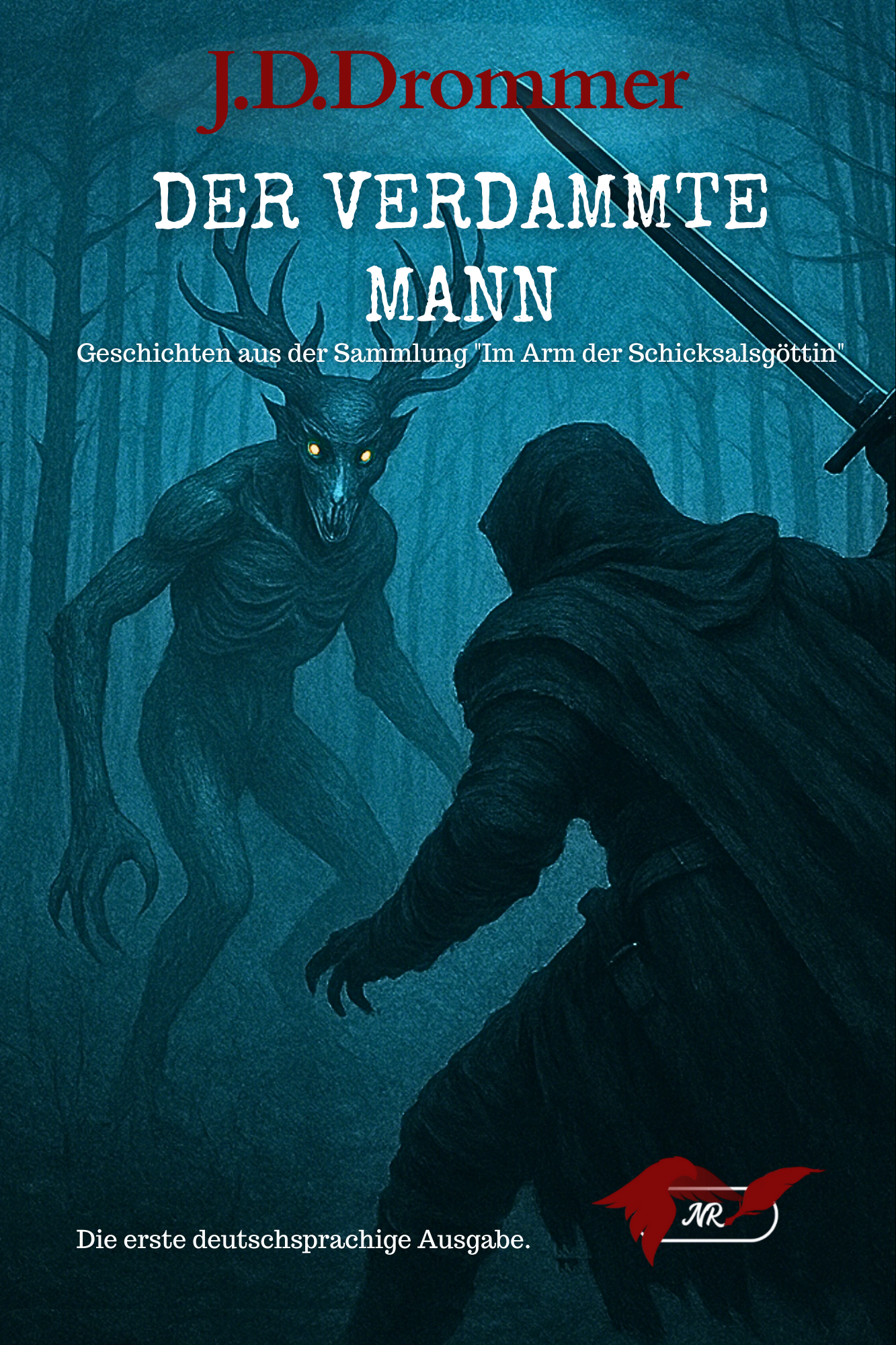
Lies Istvans Geschichte weiter – die komplette Novellensammlung ist jetzt verfügbar!